 Türkçe
 English

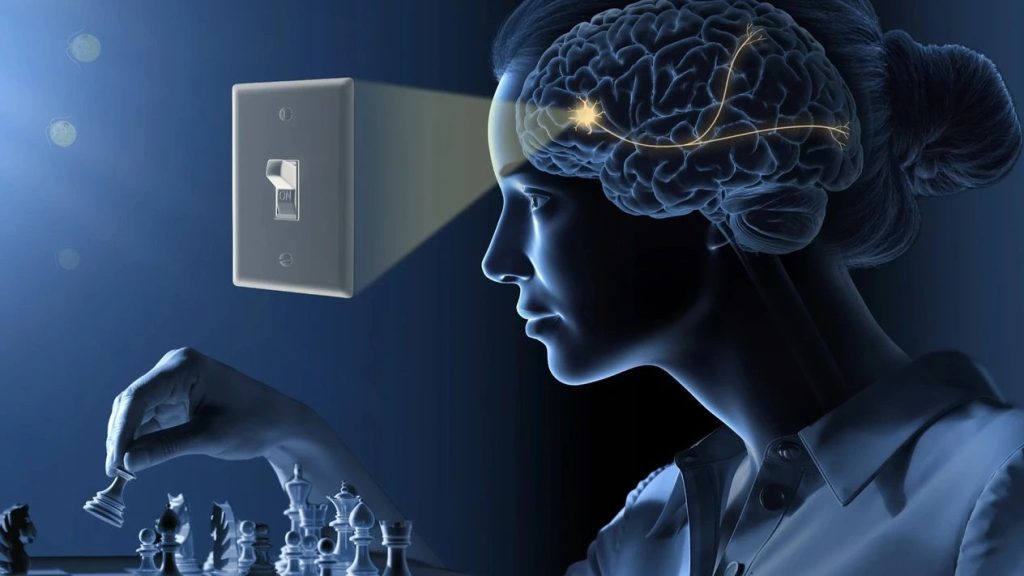
Imagine being able to switch particular nerve cells on or off with a beam of light. You could then investigate which cells take part in producing a movement, a fear or a memory. This possibility, which sounds like science fiction, is called optogenetics. At the heart of this year’s Nobel-winning discoveries is precisely this method, which allows us to study how the brain works at the level of single cells.
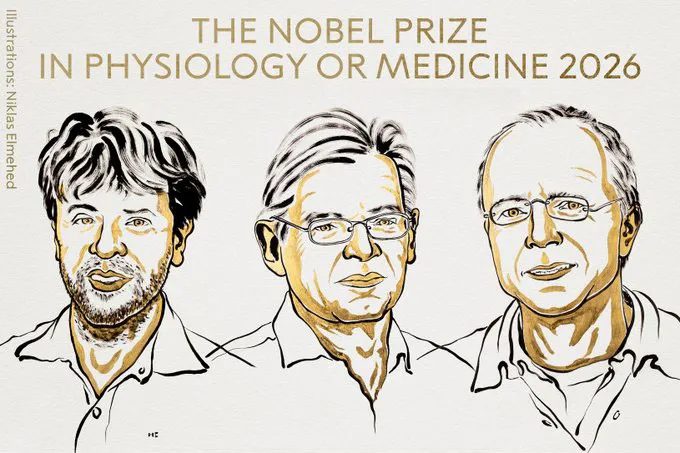
First awarded on 10 December 1901, the Nobel Prizes were created in line with Alfred Nobel’s will, to honour work that brings the greatest benefit to humankind. The Nobel Prize in Physiology or Medicine announced on 5 October 2026 went to three scientists — Karl Deisseroth, Peter Hegemann and Georg Nagel — for their discoveries on light-gated ion channels and optogenetics. This choice is a powerful example of how curiosity that begins in basic science can shape the medicine of the future.
At the beginning of the story are tiny algae that respond to light. Research into the light-sensitive proteins in these organisms opened a new path for controlling the activity of nerve cells. When target cells are made to produce these proteins through genetic methods, the right kind of light can change the cell’s electrical activity. Depending on the protein used, it becomes possible either to activate or to silence the cell.
The real strength of this method lies in enabling scientists to ask more precise questions. Seeing which cells are active during a behaviour matters, but showing that those cells are genuinely involved in producing the behaviour is a further step. By controlling selected cells and connections, optogenetics made it possible to test that relationship. Neural circuits linked to disease can therefore be studied in far greater detail.
Making movement possible again
Parkinson’s research is one of the striking examples. Thanks to optogenetics, the neural circuits involved in regulating movement were examined; in experiments on mice, intervening in specific circuits reduced Parkinson-like movement symptoms. It cannot yet be said that the same results would be obtained in humans. But understanding the circuits that disrupt movement may show which cells and connections should be targeted in the future.
In epilepsy, the question being studied is how to intervene rapidly in the relevant circuit once a seizure begins. In animal experiments, optogenetic stimulation applied after a seizure was detected produced results that suppressed seizure activity. The aim here is to control the diseased electrical activity while preserving the normal functioning of the brain as far as possible. For this to become a treatment that can be applied in humans, we are waiting for scientists to overcome the scientific and technical obstacles.
Understanding the circuits of anxiety, depression and addiction
The contribution of optogenetics is not limited to movement disorders. In anxiety research, stimulating certain connections in the mouse brain with light was found to reduce anxiety-like behaviours. In depression research, changing the activity of particular nerve cells was shown to affect some depression-like behaviours in animals. These experiments help to unravel the biological mechanisms behind complex psychological symptoms.
Important questions are also being asked in the field of addiction: why do we continue a behaviour we know to be harmful? Under what conditions do the brain’s control mechanisms weaken? In a study on rats, optogenetically activating particular cells in the front of the brain reduced cocaine-seeking behaviour that persisted despite negative consequences. This finding helps us understand the circuits associated with loss of control in addiction; we are eagerly awaiting a treatment ready for use in humans.
A new window into memory
In memory research, a striking question arises: does being unable to recall a memory mean that it has been erased from the brain altogether?
In a study on mice modelling early Alzheimer’s disease, a memory that could not be recalled through natural cues was brought back when the relevant memory cells were activated optogenetically. This result suggests that in some memory problems, access to the memory may be as important as its storage. While it does not mean that Alzheimer’s has been treated in humans, it offers a very promising direction for research into memory loss.
An example in vision that has reached a patient
One of the most concrete examples of optogenetics touching human life came in vision research. In 2021, in a patient who had lost their sight because of advanced retinitis pigmentosa, some retinal cells were made light-sensitive through gene therapy. With the help of special goggles, the patient was able to locate, count and reach for certain objects. This was not a full recovery of normal vision, but an important clinical demonstration of partial visual function.
The value of this Nobel lies not only in the treatment possibilities it offers for various diseases, but also in the knowledge it brings to the process of developing treatments. When we know which cell affects which symptom, we can define firmer targets for new approaches, from medicines to other forms of stimulation. In the future, not every treatment born out of optogenetics will necessarily use light; the knowledge the method has produced can itself turn into therapy.
There is a lesson about innovation here for us: research that began in order to understand how a tiny alga responds to light is today changing the way we approach the brain’s most complex problems. This story reminds us that the value of investment in basic science can emerge years later, in fields no one foresaw at the outset. The health solutions of the future are sometimes born by looking at the biggest problems through the smallest living things.


