Türkçe
 English

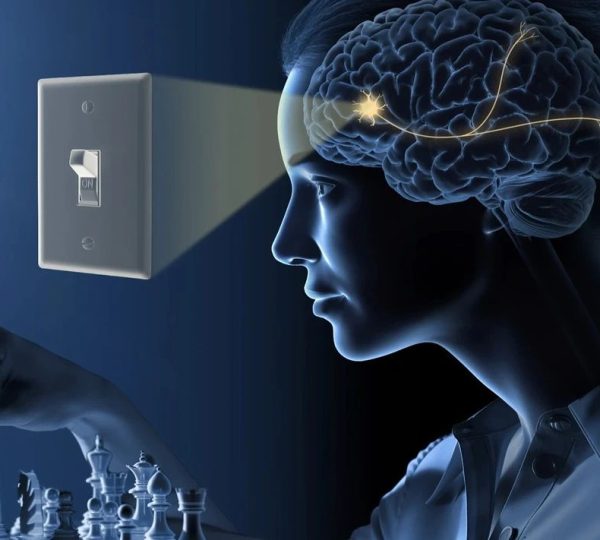
From smartwatches to genetic tests, from wearable technology to artificial intelligence measurements, illnesses can now be predicted before any symptoms appear. But will this prediction save our lives, or will it turn healthy people into anxious ones — or into patients?
A friend I love like a sister, A.S., was 54. She did not feel ill. She was getting on with her life and making plans for the future. Then a genetic test, taken at her daughter’s insistence, left a sentence in her life she had never expected: she might carry a hereditary predisposition to uterine cancer.
This was not a diagnosis. The test did not tell her, “You have cancer.” It said that, because of a particular genetic change, her lifetime risk might be higher than the population average. Yet the human mind does not always speak about probabilities with such restraint. What medicine calls “risk”, the mind sometimes translates as “an inevitable future”.
For a long time A.S. carried the weight of the same sentence: “I wish I had never taken that test.”
Because now, inside every healthy day, there was the possibility of an invisible illness. A cancer that did not yet exist had already made room for itself in her mind. On one hand the result gave her the chance to act early; on the other it cast an uncertain shadow over her life. Was the information protecting her, or taking away her peace of mind?
For a while A.S. tried to distance herself from this knowledge, to push it to the back of her mind. Later, when her grandchild was born, her view of life and of the future changed. For the sake of the years ahead with herself and her loved ones, she discussed the option of risk-reducing surgery with her doctors and decided to have her uterus removed.
The operation was initially planned as a preventive measure. However, the pathological examination of the removed tissue revealed cancer. When further assessment also showed lymph node involvement, it became clear that the disease was not confined to the uterus. About a month later, one of the most extensive and technically demanding operations in gynaecological oncology was performed. This was followed by complementary chemotherapy. A.S. came through the difficult surgeries and the chemotherapy period. Today she is back in her healthy life, living happily with her daughters, her husband who supported her endlessly, her grandchild and all her loved ones.
My friend, who a few years ago regretted having the genetic test and lived with great anxiety because of the risk she had learned about, has now left those fears behind.
Perhaps if that information had never arrived, the cancer would have advanced silently for a long time, and by the time it was noticed she would have faced a far more difficult picture. The knowledge that made her life harder at first ended up buying her time.
Today she has opened a new page for the long years she can spend with her grandchildren, her family and the people she loves.
To know, or not to know?
This is one of the hardest questions in genetic medicine. Just as people have the right to learn information about their own health, in some situations the right to choose not to know is also part of the ethical debate. Because genetic results may concern not only the person tested, but also their children, siblings and other biological relatives.
What is more, not every genetic change speaks with the same certainty. Some indicate a high and manageable risk, while others are no more than a variant whose meaning cannot yet be fully explained.
The real issue, therefore, is not to run more tests. The real issue is to offer the right test, to the right person, at the right time, within a genetic counselling process that can explain the results.
The American College of Obstetricians and Gynecologists recommends that hereditary cancer risk be assessed together with personal and family history, and that people be referred to a genetics specialist when the risk assessment suggests it. The World Health Organization, in turn, lists informed consent, privacy, transparency and individual rights among the fundamental principles for the use of genomic data.
The result of a genetic test is not destiny. It is a risk map. But handing someone the map is not enough; they also need to be taught how to read it.
And what about the small laboratories we wear on our wrists?
Today it is not only genetic tests: smartwatches and other wearable technologies also give us constant data about our bodies. Heart rhythm, sleep duration, blood oxygen level, activity, stress indicators and much more flow into our awareness at every moment. Artificial intelligence brings this data together and tries to catch patterns we have not yet noticed.
These developments can be very valuable as an early warning. But not every warning is a diagnosis, and not every deviation means disease.
False positive results can lead to unnecessary tests, to increased use of health services and to people constantly monitoring their own bodies. Studies examining false rhythm alerts produced by smartwatches show that such notifications can, in some users, reduce the sense of physical well-being and the confidence to manage their own symptoms.
Other research reports that some users experience fear or anxiety after automated health notifications. More health data, then, does not always create health wisdom. Sometimes more data means more uncertainty. That is why I believe the task of artificial intelligence should not be merely to generate risk, but also to explain how reliable that risk is, what data it is based on, the likelihood of a false alarm and what should be done next.
It is not ethical for an algorithm to say “You are at high risk” and then leave the person alone with that information. Just as medicine has the principle of “Primum non nocere” — first, do no harm — this insight must also be built into and developed within artificial intelligence platforms. The principle should now apply not only to the treatment a doctor provides, but also to the prediction artificial intelligence offers.
The World Health Organization lists protecting human autonomy, ensuring safety and transparency, clearly defining responsibility and making systems fair among the core principles for the use of artificial intelligence in health. Because the harm a health algorithm can cause is not limited to making a wrong diagnosis. Frightening someone with an unexplained risk score, making a healthy person live as though permanently ill, or conversely creating a false sense of security, can also be harmful.
A well-designed system should not simply say “You are at risk”. It should also be able to answer — or at least give guidance on — questions such as: is this result a diagnosis or a probability, how large is the risk, how scientifically reliable is the result, is there an effective screening or preventive intervention that can be carried out with this information, how should the result be evaluated with a doctor or genetic counsellor, and is the person psychologically ready to receive this information?
Even though there are currently attempts to slow down the work of artificial intelligence platforms, at the stage we have reached these insights urgently need to be built into AI applications.
A.S.’s story does not say “Everyone must have a genetic test.” Nor does it argue for genetic tests carried out randomly, without counselling, or out of mere curiosity. It says that we should not run away from medically meaningful and actionable information simply because we are afraid of it.
Knowing is sometimes heavy. It changes how a person sees the future, creates anxiety and calls for difficult decisions. Yet information interpreted with the right expertise can stop being fear itself and turn into a plan of action.
Praemonitus, praemunitus: forewarned is forearmed.
In the healthcare world of the future, genetic tests, wearable technologies and artificial intelligence will tell us more and more. Our task will not be to run away from all this data, but to make sense of it with the right experts — without mistaking it for a diagnosis, without interpreting it alone and without turning it into the single truth of our lives.
As in A.S.’s story, knowing in time sometimes does more than catch an illness early; it gives a person back the rest of their life, the years to be spent with loved ones and new possibilities.