 Türkçe
 English

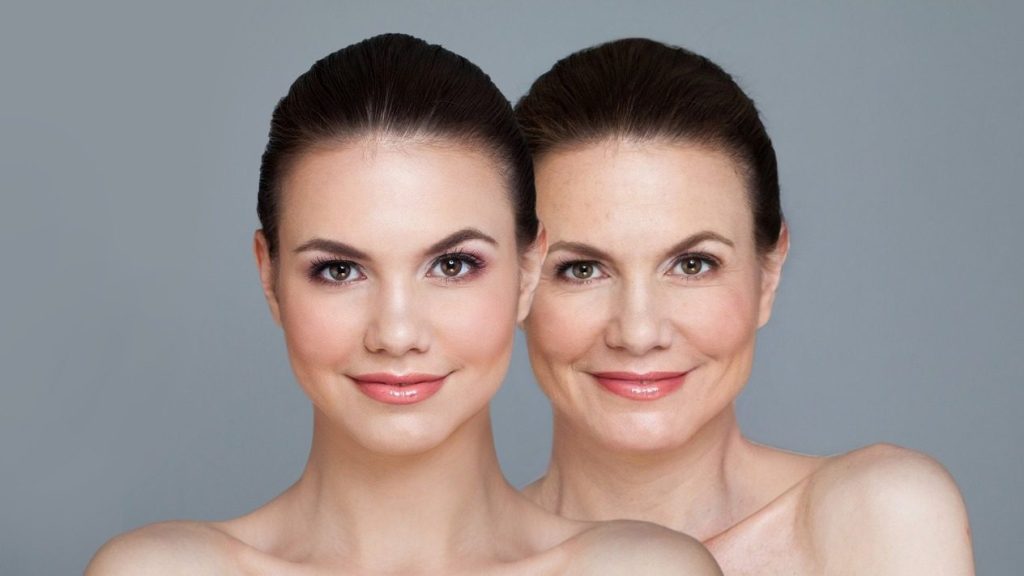
Humanity has been searching for the source of youth for thousands of years. Mythology had elixirs of immortality, sacred waters and plants that stopped time. Today, that quest has moved into the laboratory. Scientists are no longer trying to find an elixir; they are trying to understand why aging cells lose their function, whether the biological clock can be slowed, and whether some tissues can be rejuvenated.
September 1, 2026, 10:37
Could the legendary elixir of youth have a scientific counterpart?
With today’s knowledge, it is not possible to talk about a drug that instantly rejuvenates a person. Yet research being carried out at different centers around the world suggests that aging may not be an entirely one-directional, irreversible process after all.
Turning back the cell’s clock
One of the most important scientific leaps in this field came with the discovery made by Nobel laureate Dr. Shinya Yamanaka.
Yamanaka showed that an adult cell could, through four genes, be brought back to a young state capable of turning into different cell types. This discovery, known today as the “Yamanaka factors,” fundamentally transformed the fields of stem cells and regenerative medicine.
Today, we cannot fully return the target cell to its starting point. But researchers are working on “partial reprogramming” methods that make the cell younger and more functional without it losing its own identity.
Geneticist Dr. David Sinclair of Harvard Medical School defines aging not as the cell losing the information from its youth, but as the cell becoming unable to access that information. His team is trying to get cells to remember their youthful instructions again, using three of Yamanaka’s four factors. In an early-stage human study that began in 2026, researchers are examining whether the function of retinal cells can be restored in a limited number of patients with glaucoma and optic nerve damage.
This is an important scientific threshold. But it is still too early to say that aging or vision loss has been reversed in humans.
Developmental biologist Dr. Juan Carlos Izpisua Belmonte views aging as a kind of “cellular identity crisis.” According to him, inflammation, environmental effects and unhealthy lifestyle habits cause cells to gradually forget what they are supposed to do. In animal experiments, signs of rejuvenation were obtained in kidney, liver, intestinal and skin cells through partial reprogramming. Wound healing was seen to accelerate in older animals.
In the future, it may even be possible to rejuvenate organs from older donors before transplantation. But most of this work is still at the cell and animal-experiment stage.
What’s in the genes of people over a hundred?
Geneticist Nir Barzilai has studied people who reach the ages of 95 and 100 largely free of disease, along with their families. The research shows that certain genetic traits related to cholesterol and fat metabolism may delay age-related diseases. The goal is to develop drugs that can mimic the biological protection possessed by long-lived people.
Barzilai is also investigating whether existing drugs such as metformin, used in diabetes treatment, can delay multiple age-related diseases, including cardiovascular disease and cancer. It has not yet been proven that metformin extends human lifespan. The line between scientific research and commercial expectation needs to be preserved.
The work of systems biologist Dr. Uri Alon shows that genetics’ share in longevity may be higher than previously thought. When causes of death not directly related to aging, such as accidents and infections, are excluded from the calculation, about 50 percent of the variation in lifespan can be explained by genetic factors. This does not mean that lifestyle is unimportant. On the contrary, it shows that we need to understand under which behaviors and environmental conditions genetic advantages can be preserved.
We may not have a single biological age
Dr. Tony Wyss-Coray of Stanford University thinks a person may not have a single biological age. Studying protein patterns in the blood, Dr. Wyss-Coray is conducting research showing that the heart, liver, kidneys and brain may age at different rates.
In the future, health checkups may not just look for existing diseases; they may also show which of our organs is aging faster than the others. This could make it possible to intervene as risk begins to rise, rather than treating disease only after it has appeared.
But for biological age tests to carry real medical value, it is not enough for them to produce an eye-catching number. They need to accurately predict disease risk and change meaningfully as a result of interventions.
Youth’s most accessible organ: Muscle
While some scientists work on cells’ genetic programming, physician Dr. Gabrielle Lyon draws attention to a more accessible target: our muscles.
Muscle is not just a tissue that lets us move or shapes our appearance. When it works, it is a metabolic organ that secretes molecules that communicate with the brain, liver and pancreas. Preserving muscle strength is directly linked to balance, mobility, insulin sensitivity and independence in old age.
Dr. Lyon emphasizes that, especially in this era when GLP-1 drugs that produce rapid weight loss have become widespread, we need to look not only at the weight lost but also at the amount of muscle lost. While a drop on the scale can look like a health success, muscle loss can create frailty and dependency later in life. Resistance exercise, adequate protein and monitoring muscle strength are among the most powerful healthy-aging tools we currently have.
The forgotten organ in women’s aging
Reproductive biologist Dr. Francesca Duncan links the ovaries not only to fertility but to women’s overall healthspan. According to Dr. Duncan’s research, ovarian tissue stiffens with age and becomes fibrotic and inflammatory. This change doesn’t only affect egg quality; it is also linked to inflammatory signals sent to other parts of the body after menopause. Her team is developing an ultrasound-based biomarker that can measure ovarian stiffness. This work shows that women have been underrepresented in longevity research for years, and that women’s health cannot be assessed solely through the reproductive years.
Longevity’s invisible medicine: Relationships
The Harvard Study of Adult Development, led by psychiatrist Dr. Robert Waldinger and running for nearly 90 years, shows that healthy aging is not only about cells and genes. One of the study’s strongest findings is that people with quality social bonds lead healthier, more fulfilling lives.
Loneliness and social isolation, on the other hand, can be linked through chronic stress to the earlier onset of age-related diseases. One of longevity’s most accessible “elixirs” is the strong, trustworthy relationships we build around us.
The common goal of these bold scientists
At first glance, these lines of research look very different from one another. One tries to turn back cells’ biological clock, another to decode the genetic secret of people who live past a hundred. Another measures the age of organs, while others study muscles, ovaries or social relationships.
But they all share one thing in common: none of them accepts aging as an inevitable, unchangeable end.
Nor do they see aging as a single disease. They treat it as a multilayered process that progresses at different speeds in cells, organs, muscles, the immune system, hormonal structures and social life.
For this reason, the longevity medicine of the future will not consist of a single pill, serum or supplement. Biological measurements, genetic risks, organ function, muscle strength, aging mechanisms specific to women and men, lifestyle and social environment all need to be assessed together.
Today, there is no “longevity drug” definitively proven to extend human lifespan. Most cellular rejuvenation work is still at the experimental or early clinical stage. For a significant portion of popular supplements, human data remain insufficient.
By contrast, we have much stronger evidence for exercise, preserving muscle, balanced nutrition, adequate sleep, preventive health checkups and strong social relationships. The legendary elixir of youth has not yet been found. Perhaps it will never be found in a single bottle at all.
But science has begun to show that preserving youth does not pass through a single miracle; it passes through protecting our cells, organs, muscles, minds and relationships together.
The real promise of longevity science is not immortality; it is being able to add not just more years to life, but health, independence and meaning to those years.