Türkçe
 English

Artificial intelligence is now present in every area of our lives. A concept that, until a few years ago, was only on the agenda of technology companies has today made its way into the health system, from hospital emergency rooms to radiology departments, from family physicians to intensive care units.
So is a future we should genuinely fear really waiting for us?
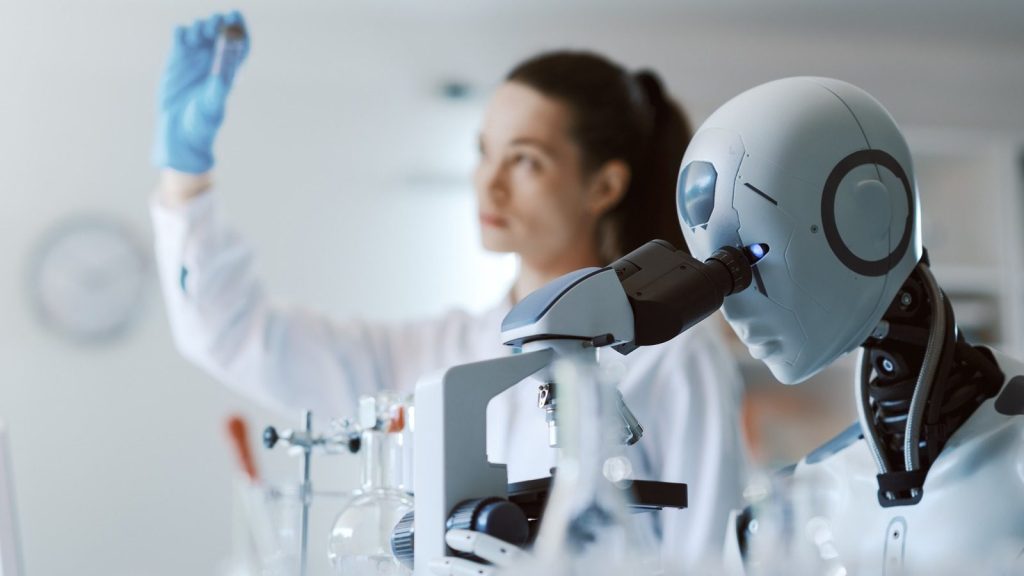
The question we hear often is: “Will artificial intelligence replace doctors?” My answer is quite clear. No. But doctors who use artificial intelligence correctly will get ahead of those who don’t. Because the essence of the transformation happening in healthcare will not be a competition between human and machine, but learning to work together.
As someone who has been in the health sector for more than thirty-five years, I have witnessed many major transformations. The establishment of digital hospitals, the spread of electronic health records, robotic surgery, remote health services and personalized medicine are just a few of them. But no change has created as sweeping a paradigm shift as the one brought by artificial intelligence. Today, what lies in front of a physician is no longer just what the patient describes or their lab results. There are electronic health records, imaging systems, genetic analyses, millions of data points coming from wearable technologies, and thousands of scientific papers published every day. The human mind cannot analyze such a vast ocean of data all at once. This is exactly where artificial intelligence comes in. But its role needs to be defined correctly.
Artificial intelligence is not a doctor that decides on its own. It is an extremely powerful assistant, an analyst that works very fast, and an advisor that can evaluate scientific evidence within seconds. The one who makes the decision must still be a human being. Because health is not made up of algorithms alone. Every patient has their own fears, expectations, different economic circumstances, family, different culture and perception. And sometimes there are life stories that are not written in any medical textbook. The only being capable of understanding these is, today, still the human being.
As an example of a successful artificial intelligence& physician collaboration model in practice, I can share the following case: the use of an early sepsis warning system.
Sepsis creates a critical condition in which an infection affects the entire body and can become fatal in a very short time. If not treated within hours, the risk of the patient losing their life rises dramatically. In the traditional approach, doctors and nurses assess the patient at certain intervals. Artificial intelligence, however, can do this second by second. By simultaneously analyzing the patient’s pulse, blood pressure, lab values, medications, nursing notes and medical history, it can issue the warning “This patient may be at risk” even before clinical symptoms have fully emerged.
But there is a very important point to note. The artificial intelligence does not say, “This patient definitely has sepsis.” It says, “Please reassess.” The final decision is still made by the doctor. In fact, this is precisely the future model in healthcare. The machine sees, the human interprets. The machine calculates, the human decides. The machine provides the data, the human takes responsibility.
I believe real innovation in healthcare lies precisely in this collaboration. Of course, this path also carries certain risks. If we don’t understand how an algorithm reaches its decision, it’s hard for us to trust it. When carrying out these analyses, artificial intelligence must not be a “black box.” A physician needs to be able to understand why the system is issuing a high-risk warning. Because transparency is the foundation of trust.
Another important issue is bias. Artificial intelligence is only as fair as the data it is trained on. If algorithms are developed based on only certain populations, there is a risk that they will produce inaccurate results for different age groups, different ethnic backgrounds, or different socioeconomic structures.
For this reason, the most valuable artificial intelligence systems of the future will not just be those that make the most accurate predictions, but also those that operate most fairly. Important tasks fall to healthcare managers here as well. Buying new software does not mean undergoing digital transformation. The real transformation lies in being able to change institutional culture, involve physicians in the process, and position technology alongside them, not in their place.
Years of experience in hospital management have taught me this: successful institutions are not the ones with the most technology, but the ones that manage change best. Bringing artificial intelligence into our lives is one example of this change. In the years ahead, we will see doctors in hospitals spending far less time in front of a screen. Artificial intelligence will prepare consultation notes. Artificial intelligence will summarize scientific publications. Artificial intelligence will prioritize at-risk patients. Artificial intelligence will optimize operating room scheduling. Artificial intelligence will forecast patient volume.
But delivering bad news, being a source of hope, building trust, managing ethical dilemmas, and looking a patient in the eye to say “We will get through this together” will still be the task of the human being.
Perhaps the greatest value artificial intelligence will bring to the health system will be enabling doctors to practice medicine again. For physicians and all healthcare staff, it will mean less paperwork, less time spent in front of a screen, more contact with patients, more communication, and ultimately more empathy — leading, in turn, to greater patient satisfaction.
The future of health will not be a world in which human and machine compete. The winning side will be teams that complete each other’s strengths. And perhaps, years from now, we will describe artificial intelligence not as doctors’ rival, but as an invisible yet indispensable teammate.
Because the best hospitals of the future will not be the ones with the most expensive technology, but the institutions that can use technology to strengthen the human touch. And that is exactly where the real revolution in healthcare will begin.