Türkçe
 English

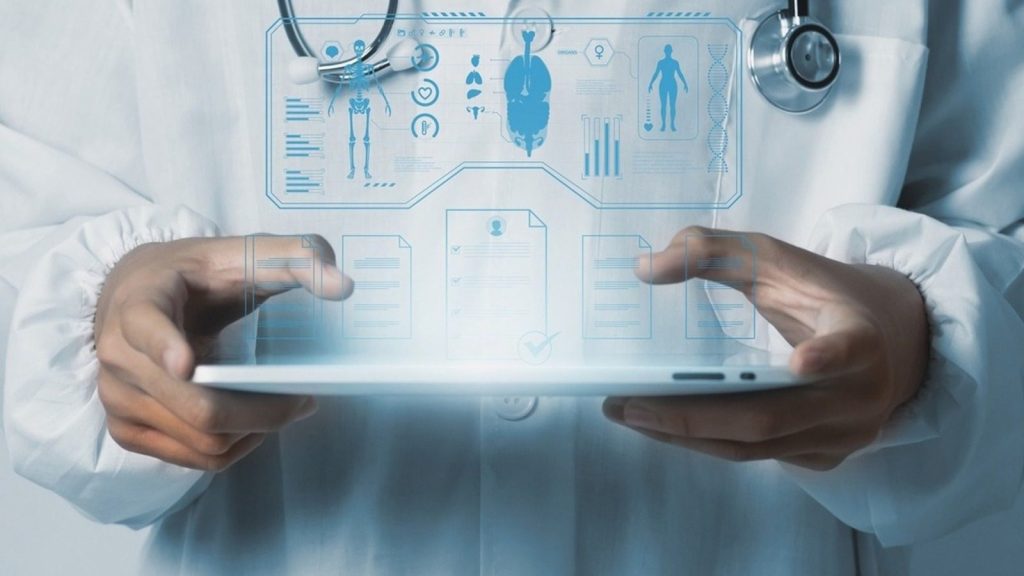
Artificial intelligence in healthcare is preparing not to replace doctors, but to strengthen their decision-making power. As different technologies — from symbolic AI to machine learning, from generative AI to reinforcement learning — transform healthcare across a broad field spanning diagnosis to hospital management, the model of the future will be a new understanding of medicine in which humans and AI work together.
Toward AI-assisted medicine: where will each type of AI be used in the future of health?
Throughout the history of medicine, physicians have always had an assistant by their side. First came the stethoscope. Then X-rays, ultrasound, MRI, and genetic tests…
Each new technology contributed to physicians making faster, more accurate, and safer decisions. Today, the world of health is meeting a new companion: artificial intelligence.
But a significant part of the discussions around AI still revolves around the wrong question: “Will artificial intelligence replace doctors?”
Yet those working within the health sector are now discussing a very different question: how much stronger will physicians who use AI effectively be than those who don’t?
Because what we call “artificial intelligence” today is not actually a single technology. It is a large ecosystem made up of systems with different ways of thinking, developed to solve different problems. The future of healthcare will depend on how these systems work together.
Let’s imagine a patient arriving at one of the health centers of the future. Perhaps a longevity clinic… perhaps a university hospital using advanced technology…
When the patient walks in, the system will not just look at lab results. It will simultaneously evaluate their genetic risks, lifestyle, sleep quality, stress level, past health records, and even millions of data points gathered from similar patients. This is where the different faces of artificial intelligence begin to come into play.
First, systems that think in rules take the stage. This approach, today defined as “Symbolic AI,” resembles the clinical guidelines held in an experienced physician’s mind.
It checks international treatment guidelines, evaluates drug interactions, and ensures no critical detail is missed. It still plays an indispensable role, especially in clinical decision support systems, insurance processes, and applications requiring patient safety. Next comes AI that learns from data.
The “Machine Learning” approach, unlike Symbolic AI, discovers relationships the human eye cannot see by analyzing millions of images, lab results, and patient records.
Today, this approach underlies progress in many areas, from detecting lung nodules in radiology to identifying cancer cells in pathology.
But healthcare is not just about making a diagnosis. Using the right resources at the right time is just as important as an accurate diagnosis. This is where “Reinforcement Learning” comes onto the stage. This approach resembles the clinical intuition a physician develops over years of seeing cases. It learns from every outcome. It rewards successful decisions.
It learns lessons from failed outcomes. Over time, it learns to develop better recommendations. It is expected to play an important role in the years ahead in areas such as intensive care management, patient flow, bed planning, and operations management.
And finally comes Generative AI, the star of recent years. In fact, much of society came to know artificial intelligence through it. Because for the first time, a technology doesn’t just analyze — it writes, summarizes, reports, narrates, and produces new content. It can generate in minutes reports that would take a physician hours to prepare, translate complex health data into language a patient can understand, and summarize scientific publications.
But the greatest impact AI will have in healthcare may emerge not in diagnostic rooms, but in the unseen administrative background of hospitals. To illustrate this, I can give an example from the operating-room problem every hospital experiences. One of a hospital’s most expensive and most critical resources is the operating room. And yet, in many places around the world, operating rooms are not used at full capacity because of planning errors. Late-starting surgeries… incorrect duration estimates… last-minute cancellations… waiting patients… exhausted teams… and rising costs or lost revenue…
So what can AI do here? The R.O.A.D. approach we worked on in the recent period gives a fairly clear answer to this question.
First, the hospital focuses on the problem, not the technology. What is our goal? First, we define it. Is it raising operating-room utilization from 65 percent to 80 percent?
Is it reducing waiting lists? Increasing surgeon satisfaction? The first step is answering these questions.
Then the data begins to speak. Past surgery durations, surgeon-level performance, anesthesia records, cancelled cases, intensive-care occupancy, and staffing plans are analyzed.
Often, the first surprise appears right here. Surgeries expected to take two hours turn out to average four hours or more. It becomes clear that estimates used for years do not reflect reality.
Then we bring AI into play. With the Machine Learning method, we can predict surgery durations more accurately by examining thousands of past operations. With Reinforcement Learning, we learn to optimize the schedule by analyzing outcomes at the end of each day. We increasingly begin to predict, more accurately, which surgeries are more efficiently scheduled at which hours, which cases carry a delay risk, and which operations have a high likelihood of last-minute cancellation. Generative AI, meanwhile, turns all of these complex analyses into understandable recommendations for operating-room managers and surgeons.
As a result, it is not just operating-room efficiency that increases. More patients can be operated on. Waiting times decrease. Surgeons can use their time more effectively.
Patient anxiety decreases, satisfaction rises, and hospital revenues increase. In this way, access to healthcare becomes easier.
All of this shows us a very important truth. The health system of the future will not be built on an “AI Doctor.” The model of the future will be AI-assisted medicine. Artificial intelligence will analyze millions of data points within seconds. It will calculate risks, rank alternatives, and optimize operations. But the final decision will still be made by the human. Because no algorithm can read the fear in a patient’s eyes. No model can take on ethical responsibility. No system can feel empathy.
In the future of health, the winning side will not be the human or the artificial intelligence. The winner will be the health systems able to bring human intuition and AI intelligence together at the same table. The most successful health professionals of the coming decade will not simply be those who know anatomy, pharmacology, or surgical technique. They will also be those who can interpret data, manage AI, and put all of this technological power to use for the benefit of the human being.
And perhaps the sentence that best describes the health world of the future is this:
“Humanity’s cure will still lie within the human being; but this time, alongside that human, there will be a very powerful AI companion multiplying their capacity.”