Türkçe
 English


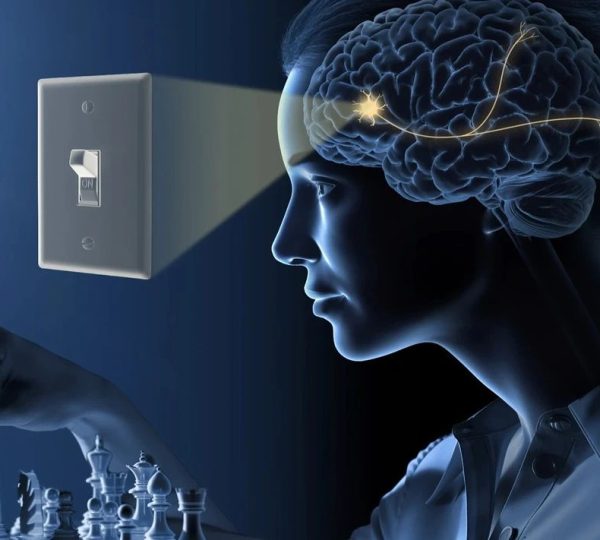
As medicine — a journey kneaded from limitless knowledge within a limited lifetime, demanding patience, mastery, and a deep understanding of the human being — is reshaped by the influence of artificial intelligence, the notion of “Ars longa, vita brevis” is taking on new meaning today.
Throughout history, there are certain professions that demand not merely a job, but a lifetime of devotion, patience, and depth.
Medicine is perhaps the most striking of these professions.
The Latin phrase “Ars longa, vita brevis” tells us that art is long, life is short.
But this saying finds its most powerful meaning in the art of medicine.
Because medicine is a journey in which learning is never complete, knowledge is constantly evolving, and mastery is shaped over time.
Medicine, which has one of the longest training processes in the world, is completed not by academic knowledge alone, but by experience, observation, and depth of understanding of the human being.
Training a physician takes years: basic medical education, specialization, subspecialty, and often lifelong learning.
But the paradox begins here: human life is limited.
And the physician must, within this limited time, learn, apply, and leave a mark, all at once.
Touches that transcend time: those who broke new ground in medicine
The names that shaped the history of medicine didn’t just produce knowledge — they changed the rules of medicine’s game.
Edward Jenner changed the fate of one of humanity’s deadliest diseases with the first vaccine he developed against smallpox.
Alexander Fleming launched the modern antibiotic era by discovering penicillin, and infections stopped being a death sentence.
Marie Curie opened the door to the use of radiation in medicine, paving the way for a new era in cancer treatment.
Christiaan Barnard redefined boundaries once thought “impossible” by performing the first heart transplant.
Tu Youyou saved millions of lives with the discovery of artemisinin and showed how modern medicine could merge with traditional knowledge.
What these names had in common was this: they were not content with what they had learned. They transformed knowledge.
Medicine: more than a profession
Mastery in medicine is not merely technical skill. Decision-making, empathy, ethical stance, and the ability to cope with uncertainty are inseparable parts of this profession.
Every patient, every case, every decision deepens the physician’s knowledge while simultaneously growing their responsibility.
And that is why medicine is not only the profession in which learning takes longest, but also one of the professions that carries the highest meaning.
A new era: artificial intelligence and the evolution of medicine
Today, medicine is experiencing one of the greatest transformations in its history. Artificial intelligence can analyze millions of data points within seconds, make early diagnoses, and even support clinical decision-making processes.
A physician now decides not only with their own experience, but together with the entire global pool of knowledge. Genetic test results we used to wait weeks or months for, until quite recently, can now be obtained in a much shorter time, letting us learn about life-threatening risks and plan our treatment journey.
This is exactly what is redefining the concept of “ars longa.”
In the past, mastery accumulated over years. Today, access to knowledge has accelerated, but the essence of mastery has not changed:
Asking the right question, making the right decision, and understanding the human being.
Artificial intelligence is accelerating learning, but it does not eliminate the element that makes medicine human — on the contrary, it makes it more visible.
Looking at it from a futuristic angle: a new Ars Longa is in our lives. So how will medicine be shaped in the future?
Perhaps diagnoses will be made by algorithms, surgeries will be performed by robots, and treatments will be planned according to personalized genetic maps. But one truth will not change:
In my view, human beings will still need to touch other human beings.
And medicine will continue to be the most critical bridge between knowledge and humanity.
Conclusion: a long impact in a short life
To create a long impact within a short life, “Ars longa, vita brevis” is no longer just a philosophy — it is a calling.
Today’s physicians are not only healing patients — by managing new practices amid all this change, they are also building the health system of the future.
And perhaps this is the definition of the new era: life is still short, but knowledge is now limitless. And where these two intersect, true mastery begins.