Türkçe
 English

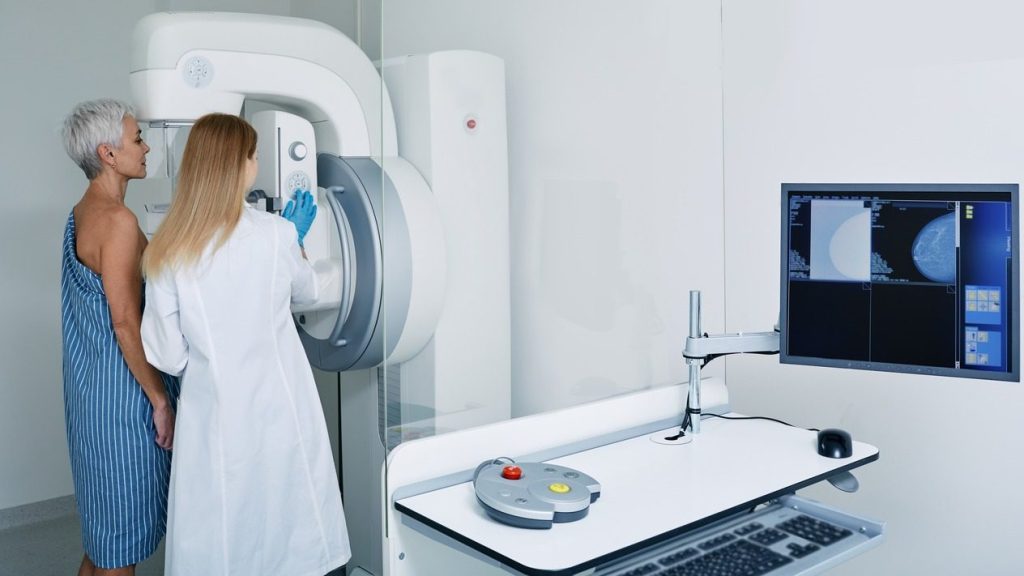
A woman comes to the hospital for a routine breast cancer screening. Mammogram images are taken, and before the radiologist even begins reviewing them, the software has flagged suspicious areas within seconds. The system marks a possible cancer finding and moves the case to the priority review list. A scenario we might have dismissed as science fiction just a few years ago has now started becoming part of healthcare delivery in many countries around the world.
Artificial intelligence has made significant progress in medical imaging over the past decade. Deep learning algorithms today produce results that rival — and in certain narrow tasks even surpass — human performance in detecting breast cancer on mammograms, diabetic retinopathy on retinal images, lung nodules on CT scans, and certain fractures on X-rays. So if AI can outperform radiologists on some imaging tasks, should human review of the images still be mandatory?
In my view, and in the view of many healthcare executives, the answer to that question today is still “yes.” A few years from now, this piece and this answer may no longer hold true. But an important distinction needs to be made here. Even if human review continues, current ways of working must change. AI can serve as the first reader in medical imaging domains where its accuracy has been scientifically proven and properly validated. The radiologist, meanwhile, will move from being the person who reviews the image from start to finish to becoming the expert who evaluates the AI’s findings, correlates them with clinical information, manages uncertainty, and makes the final call. This is exactly where the real transformation begins.
The area where modern AI systems are strongest is pattern recognition. Algorithms can analyze millions of different features within an image simultaneously. They can detect tiny density differences, shapes, or textural changes that the human eye might struggle to notice. AI systems trained on large, accurately labeled datasets can achieve high sensitivity and specificity in image classification tasks.
The MASAI trial in breast cancer screening was one of the strongest examples of this. In a randomized controlled study involving more than 80,000 women in Sweden, AI-supported mammography screening was compared with standard double-reading by two radiologists. Initial results showed that screenings using AI support detected roughly 20 percent more cancer cases while reducing radiologists’ image-reading workload by around 44 percent. Moreover, there was no notable rise in false positives. These results are extremely significant, because they show us that AI doesn’t just speed up radiologists’ work — when used correctly, it can also improve diagnostic performance and the efficiency of the health system.
It must be remembered that interpreting a medical image is only one part of the diagnostic process. When reviewing an image, a radiologist also takes into account the patient’s age, history, prior tests, medications, past surgeries, lab results, genetic risks, and other clinical findings. The same image can carry a different meaning depending on different patient histories. When rare case types are involved, or diagnosis concerns people with genetic characteristics not represented in the dataset the AI was trained on, machine diagnosis alone may not be sufficient.
Furthermore, while AI today can recognize patterns in an image very well, it cannot yet evaluate the patient’s whole story, the social and psychological dimensions of the illness, or the consequences of a treatment decision as comprehensively as a human physician can. In the end, I would sum it up this way: artificial intelligence reads the image. The human physician reads the patient.
While AI analyzes the pixel, the physician evaluates the context. While AI points to a suspicious area, the physician decides what that finding means for the patient.
That’s why, even though AI has surpassed human performance in certain imaging tasks, it still needs time to reach a holistic clinical decision-making capacity. This is why I believe human oversight must continue for now. In the imaging techniques we use in healthcare, not every image can be reviewed with the same method and the same intensity. In particularly high-volume areas such as mammography, chest X-rays, or certain CT scans, AI can be used as the first reader. The system can evaluate images within seconds, separate out clearly normal exams, and bring suspicious cases to the radiologist on a priority basis. In such a model, the radiologist’s time is allocated preferentially to critical cases. The specialist’s attention shifts to complex cases that genuinely require expertise and clinical judgment. This approach presents a major opportunity, especially for health systems and regions with a shortage of radiologists.
Today, in many countries, demand for medical imaging is rising rapidly while the number of radiologists is not growing at the same pace. An aging population, the spread of cancer screening programs, the rise in chronic illness, and easier access to imaging technologies are all increasing demand for radiology services. Training a qualified radiologist takes a long time. Health systems cannot close this gap quickly simply by training more specialists. Here, rather than being a technology that replaces the radiologist, AI can be a colleague that expands existing radiologist capacity. It can help a radiologist review more studies more quickly and more safely. It can prevent urgent, high-risk cases from getting lost in the waiting list. It can shorten reporting times. It can serve as a second set of eyes during night shifts or busy working hours.
So we can say we now have a companion that helps deliver our existing radiologists’ expertise to more patients, faster and more safely.
Radiology workflow will be redesigned
AI’s real impact will perhaps be felt in hospitals’ workflows even before diagnostic accuracy. In the traditional radiology process, the image is taken, the exam lands on the radiologist’s worklist, the radiologist evaluates the image, a report is prepared, and it is sent to the relevant physician. In a system where AI is the first reader, the process becomes far more dynamic.
Images can be analyzed by AI as soon as they are acquired. High-risk images can be automatically moved to the top of the list. Alerts can be generated for findings requiring urgent intervention. Exams that appear clearly normal can be finalized with a shorter human check. Complex images involving multiple conditions can be routed to experienced radiologists. This way, the radiology department stops being a structure that simply reports incoming images in the order they arrive. It turns into an intelligent diagnostic center that operates according to clinical risk and priority.
In this model, AI doesn’t just analyze images. It organizes the worklist, prioritizes it, compares new exams with older images, and can flag potential inconsistencies between the report and the image.
For hospitals, this translates into shorter reporting times, faster diagnosis, more efficient use of human resources, and a better patient experience.
But an important management issue arises here: it is not enough to simply add AI to the existing system as a piece of software. If a hospital keeps the same workflow, does not redefine roles, and merely bolts an algorithm onto the system, the expected efficiency gains may never materialize. For this reason, an AI implementation is not just an IT project — it is also a “clinical and organizational transformation project.”
Who will be responsible when AI makes a mistake?
As AI takes on more responsibility in healthcare, one of the hardest questions will be legal liability. If an AI system misses an early-stage breast cancer, who will be held responsible? The radiologist? The hospital? The company that developed the AI? The technology firm that sold the software? Or the regulatory bodies that authorized the system’s use?
Current legal approaches mostly treat AI not as an independent decision-maker but as a clinical decision-support system. This is why final responsibility today rests with the physician.
But as AI systems become more autonomous, I don’t think this approach will remain sustainable for long. On one hand, physicians are advised to use a system that is said to outperform them in certain tasks. On the other, when the system makes a mistake, the physician is still assumed to bear full responsibility. What’s more, exactly how some AI models arrive at their conclusions may not be fully explainable. Holding a physician solely responsible for the output of an algorithm whose decision-making process they cannot fully see will create a significant ethical and legal tension.
In the future, the healthcare sector will move toward a shared responsibility model. Responsibility will be shared not only by the physician but also by the hospital, the AI developer, the software provider, the teams that validate the system, regulatory bodies, and the managers who set the conditions of use. As in aviation, a multi-layered safety and responsibility system can be established. The safety of a flight is not the pilot’s responsibility alone. The aircraft manufacturer, software developers, maintenance teams, air traffic control, and regulatory bodies all share responsibility together. A similar approach should be developed for AI in healthcare.
What AI and humans contribute to each other
In discussions about AI, we usually talk about the mistakes the technology might make. Yet one of AI’s most important safety contributions may be catching human errors. Radiologists, like all humans, can get tired. Long working hours, night shifts, high imaging volumes, and the constant need to make decisions can lead to lapses in attention. When one significant finding is present in an image, a second abnormality can be missed. In the literature, this is called the tendency to end an examination early once the sought-after finding has been located — “satisfaction of search.” Fortunately, AI doesn’t get tired. Its attention doesn’t wander. It doesn’t experience a performance gap between night and day. It can review the same image with the same systematic approach every time. An AI system can continuously scan images, compare them with prior exams, flag lesions that might be missed, and show whether there is an inconsistency between the report and the image.
But the reverse is also true. Humans can catch AI’s mistakes as well. AI can sometimes interpret an artifact in an image as pathology. It can produce a finding that is anatomically impossible. It can reach a wrong conclusion on a rare disease it has never encountered before. For this reason, the safest structure is not one where the human or the AI decides alone, but one where the two check each other.
AI catches human error. The human catches AI error. Disagreement between the two sides can be treated not as a failure, but as a safety signal requiring more detailed evaluation.
High AI accuracy alone is not enough
Even if an AI model shows 90 or 95 percent accuracy in a research setting, it may not achieve the same success in a real hospital environment. That’s because algorithms only carry the characteristics of the data they were trained on. A system trained on a specific patient group in Europe and on images acquired from specific devices may produce different results in a country with different ethnic backgrounds or different imaging equipment. Even the prevalence of diseases in a population can affect AI performance. In rare diseases, post-surgical changes, complex cases where a patient has multiple conditions, and low-quality images, AI can struggle to produce an accurate result. This is why, instead of buying an AI system once and using it for years without oversight, we need to keep retraining it with data on an ongoing basis. Every hospital must validate the system it uses against its own patient population and its own equipment. False positives, false negatives, disagreements between humans and AI, and performance shifts in specific patient groups should be fed back into the system regularly.
There are numerous studies showing that AI systems improve diagnostic accuracy or workflow. However, the number of randomized controlled trials showing that these improvements extend patients’ lifespans, reduce complications, or lower mortality rates is still limited. Finding more cancers is a meaningful achievement. But how many of the cancers found are clinically significant, how early diagnosis affects treatment outcomes, and what the system’s real contribution to patient life actually is are still being investigated today. We can measure AI’s success in healthcare by the benefit it delivers to the patient.
The radiologist of the future will not be a specialist who reads images, but a manager of diagnostic intelligence. As someone who has worked in healthcare for roughly thirty-five years and has led hospitals through founding, growth, and transformation processes, I have repeatedly witnessed technological advances redefine the roles of health professionals far more often than eliminate them.
Similar concerns arose when CT, MRI, robotic surgery, and electronic health records were first introduced. It was thought these technologies would replace physicians.
But technology did not eliminate the medical profession. It expanded physicians’ capabilities and the scope of what they could deliver.
The change we face today with AI may be greater than all of these. Because this time, it isn’t just the devices we use that are changing. The way we make decisions is changing.
I believe future radiologists will spend a smaller portion of their time hunting for individual abnormalities within images. Instead, radiologists will evaluate AI results, integrate images with other clinical data, manage complex and ambiguous cases, take a more active role in multidisciplinary tumor boards, communicate more with patients and clinicians, oversee the performance of AI systems, and lead quality-improvement processes.
What should hospital executives do starting today?
The spread of AI in healthcare is changing the responsibilities not only of physicians but of hospital executives as well. Rather than viewing AI as a decision to purchase software or a device, executives need to perceive and manage it as a transformation process that encompasses clinical governance, human resources, law, ethics, data security, and patient experience all together.
Every healthcare institution needs to build a clear governance model for AI. Hospital leadership must define, in this new era: which systems will be used; how the chosen system will be validated against the hospital’s own data; the process to follow when AI and the physician disagree; how the performance of the algorithm in use will be managed; how the security of patient data will be protected; and how responsibilities will be shared.
Will the final word still belong to the human?
For today, yes.
But the meaning of that final word will change.
The physician who speaks the final word will need to continually evaluate AI’s findings. It will be the physician or health executive who combines AI’s analysis with the patient’s clinical information, manages uncertainty, and carries the human, ethical, and legal responsibility for the decision.
In the health system of the future, the real question is how we bring together the strengths of two different types of intelligence for the patient’s benefit. AI can carry out repetitive cognitive tasks with great speed and consistency. The human brings context, ethical values, empathy, intuition, and responsibility into the process.
The most successful hospitals of the future will be institutions that can bring human intelligence and artificial intelligence to work together within the right workflow, in the safest and most ethical way. In these institutions, the culture that is built will move scientific evidence, technology, clinical experience, ethical responsibility, and humane care for the patient forward together. And in the future of healthcare, true success will mean being able to make that decision within a system where humans and AI complement each other’s shortcomings.
To continue reading;
https://www.forbes.com.tr/yazar/meri-istiroti